A sales workspace built around the decisions that matter.
An AI-assisted frontend concept connecting leads, deals, accounts and sales targets through consistent workflows.
A closer look at the work.
CRM tools are useful only when a salesperson can see what needs attention and where the next action belongs. This frontend explores the relationships between leads, deal progression, customer accounts and sales targets.
I used AI-assisted development to accelerate interface production, then organized the result around the workflows of a sales team. The repository is a frontend prototype powered by local mock data—not evidence of a live CRM deployment or measured business results.
Make the pipeline navigable, not just visible.
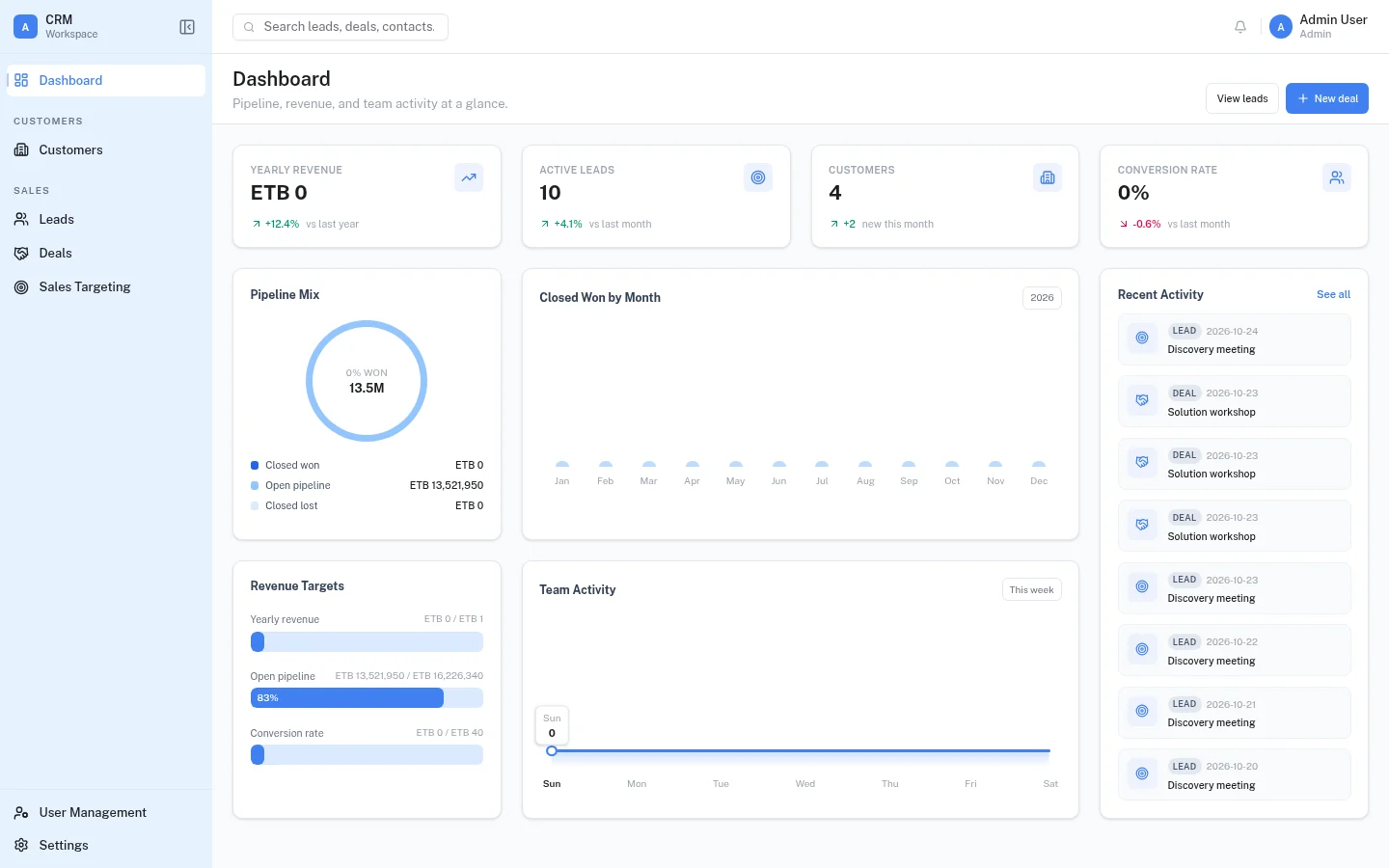
The dashboard combines sales KPIs and a pipeline overview, while dedicated modules handle leads, deals and customers. That separation lets users scan performance first and enter the appropriate workflow when detail is needed.
This is a speculative interface exercise. No documented research sample or production analytics are available, so the design problem is framed as an opportunity rather than an observed customer complaint.
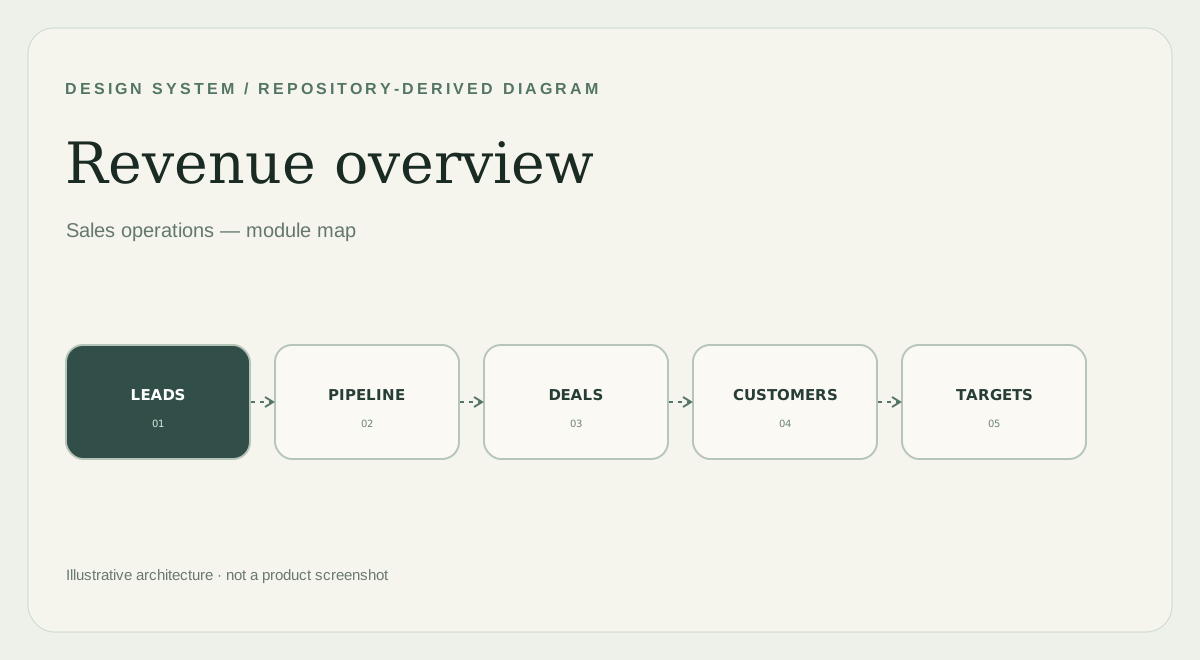
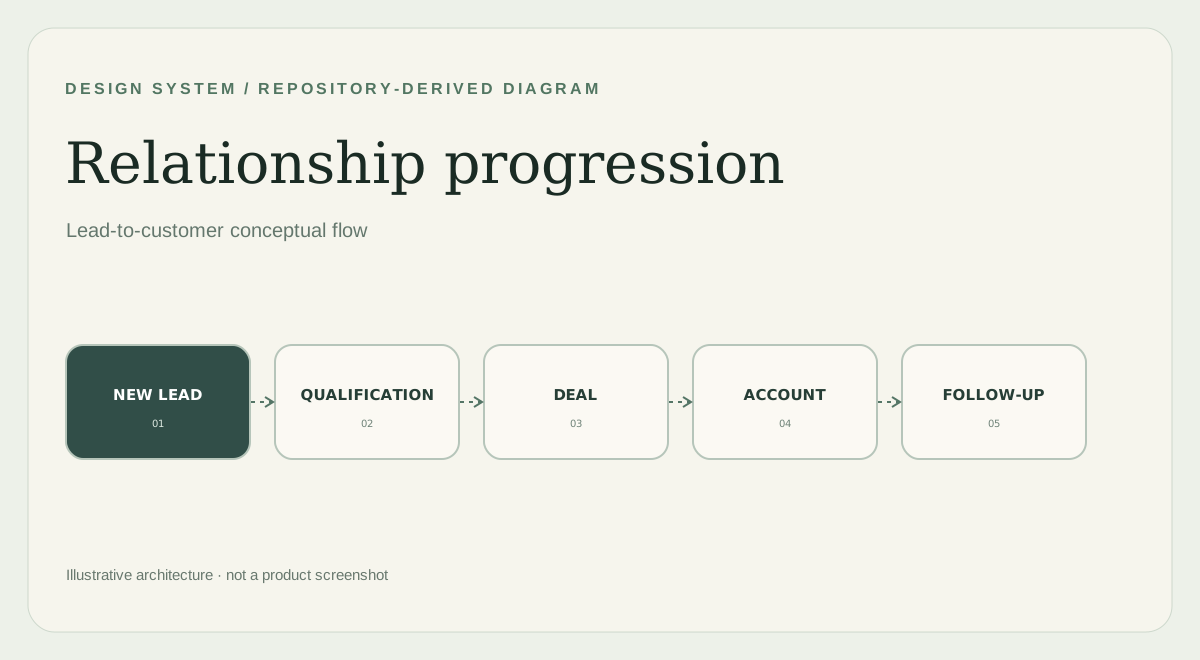
From lead to deal to account.
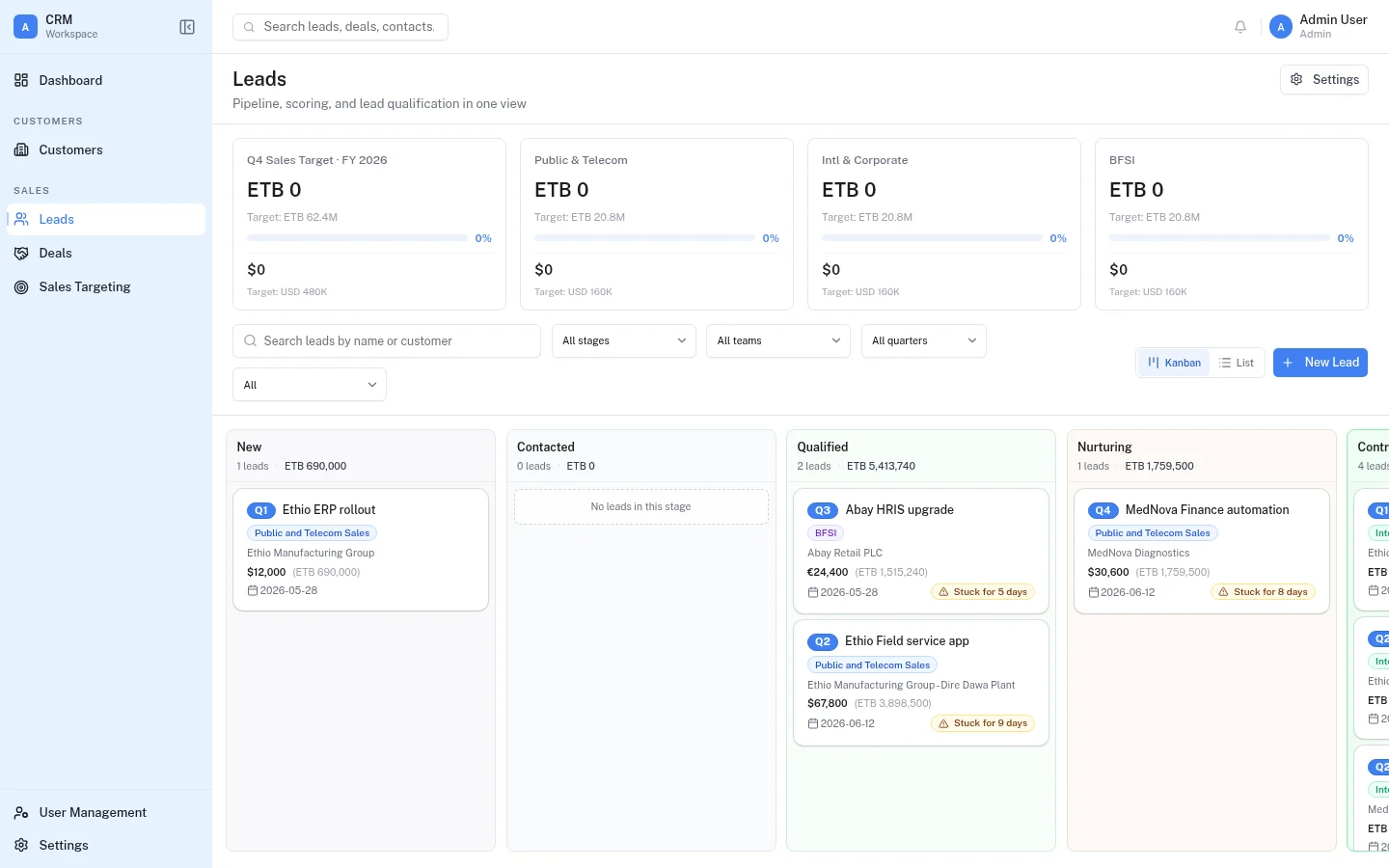
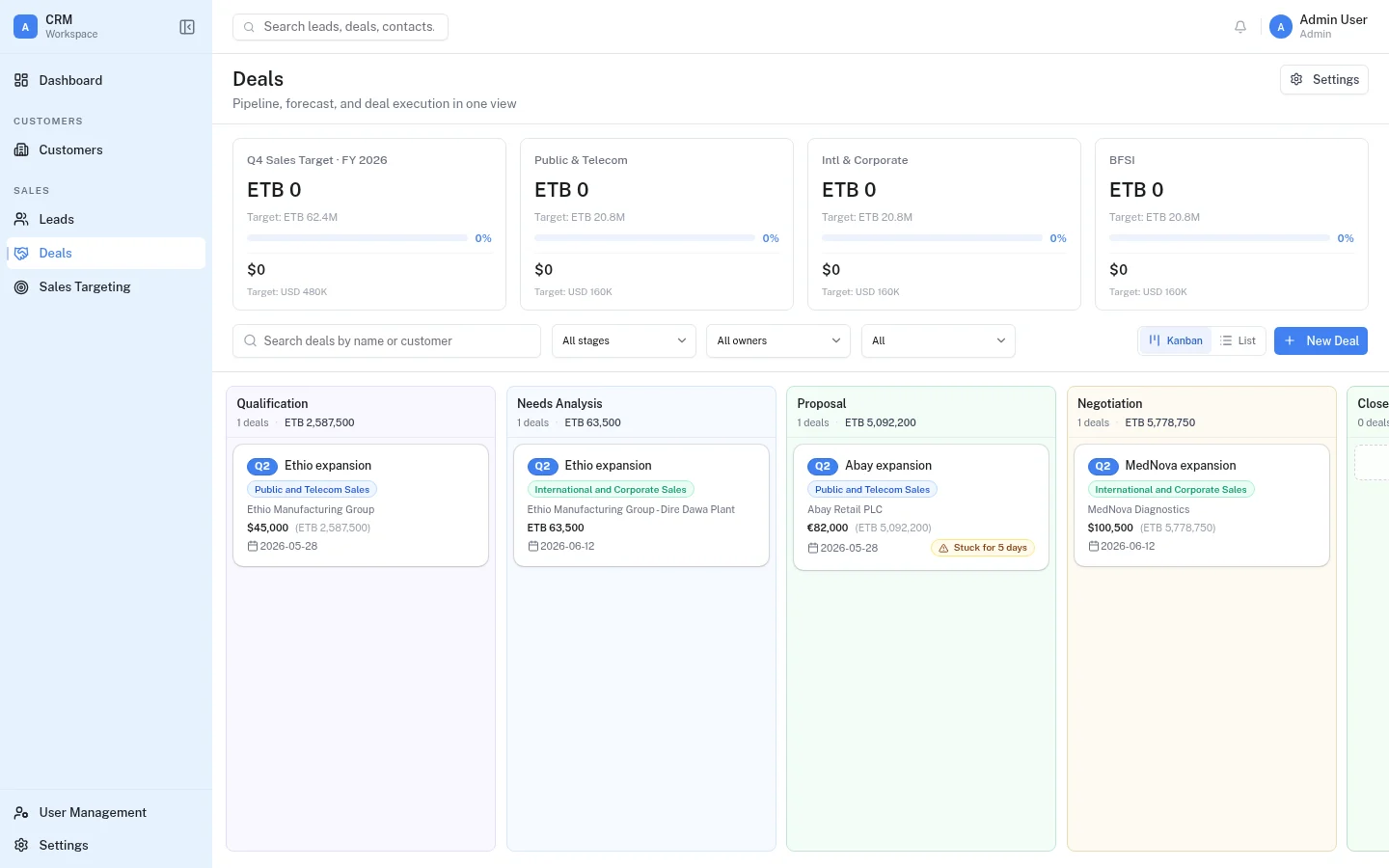
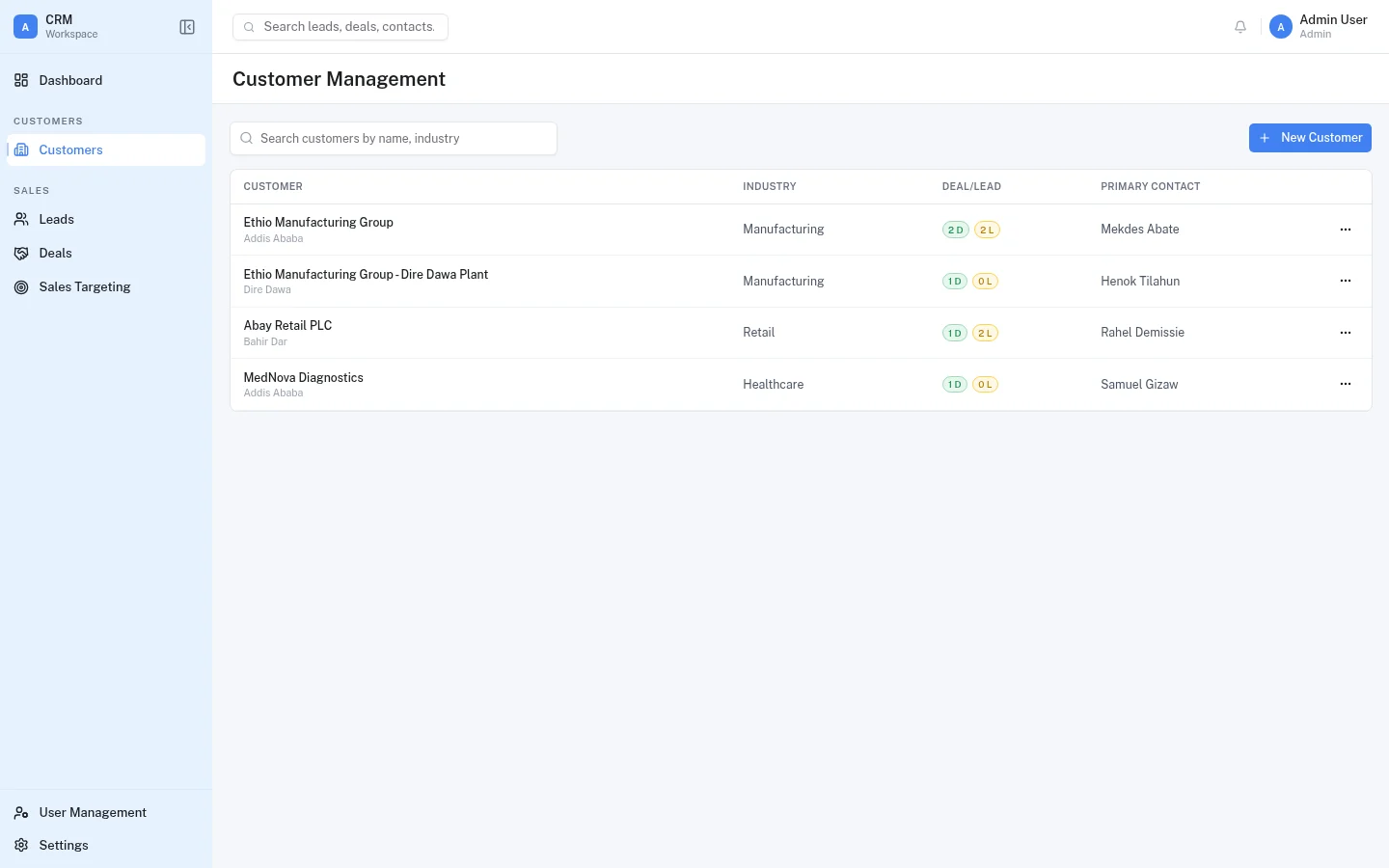
Dedicated screens include lead management, lead detail, deal management, deal detail and customer management. Shared patterns can preserve context as a potential customer moves through a relationship.
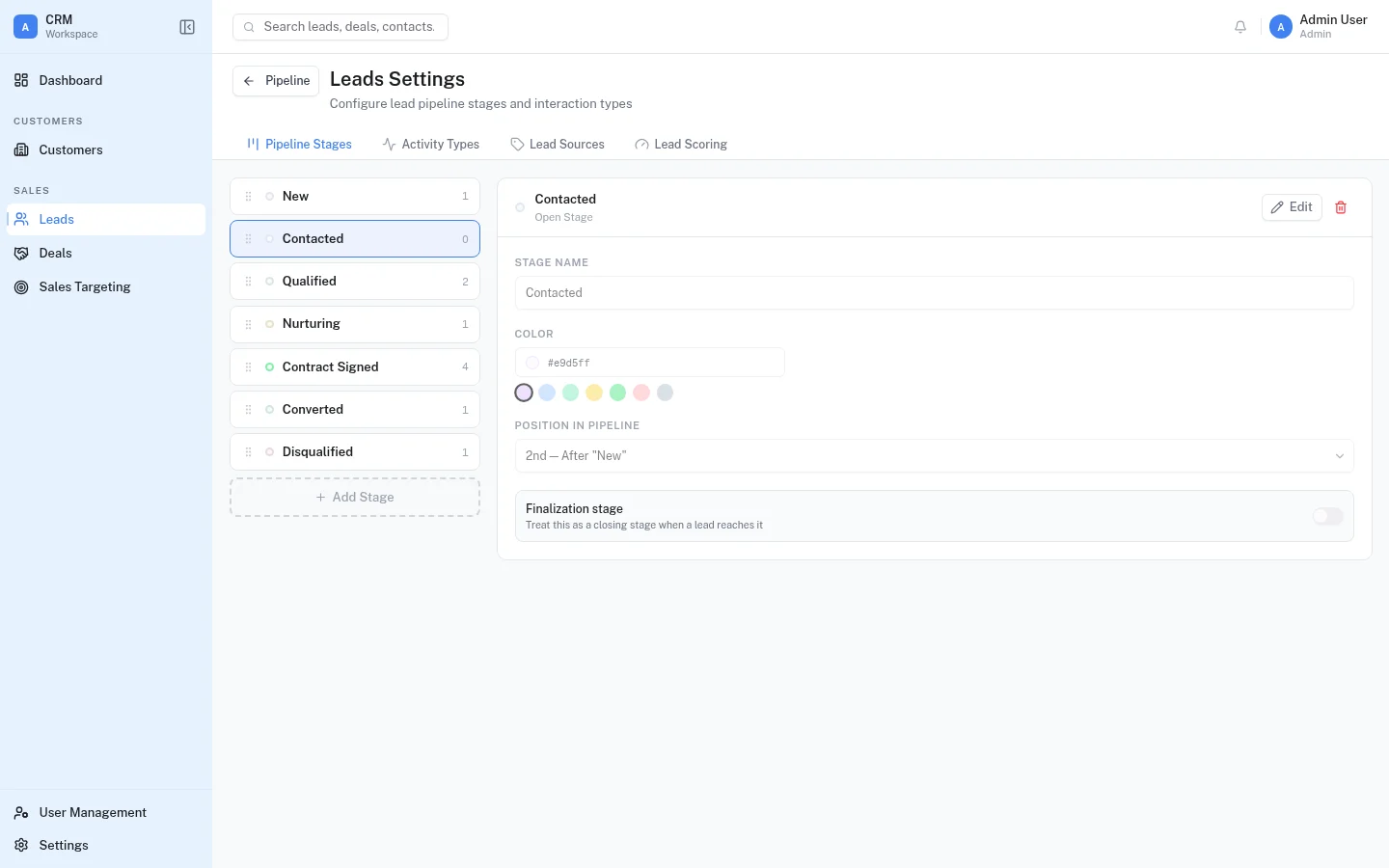
The code includes configuration for lead scoring, lead targeting, a PQQ form builder, and deal settings—evidence that the interface considers both day-to-day work and administrative configuration.
Goals and execution belong together.
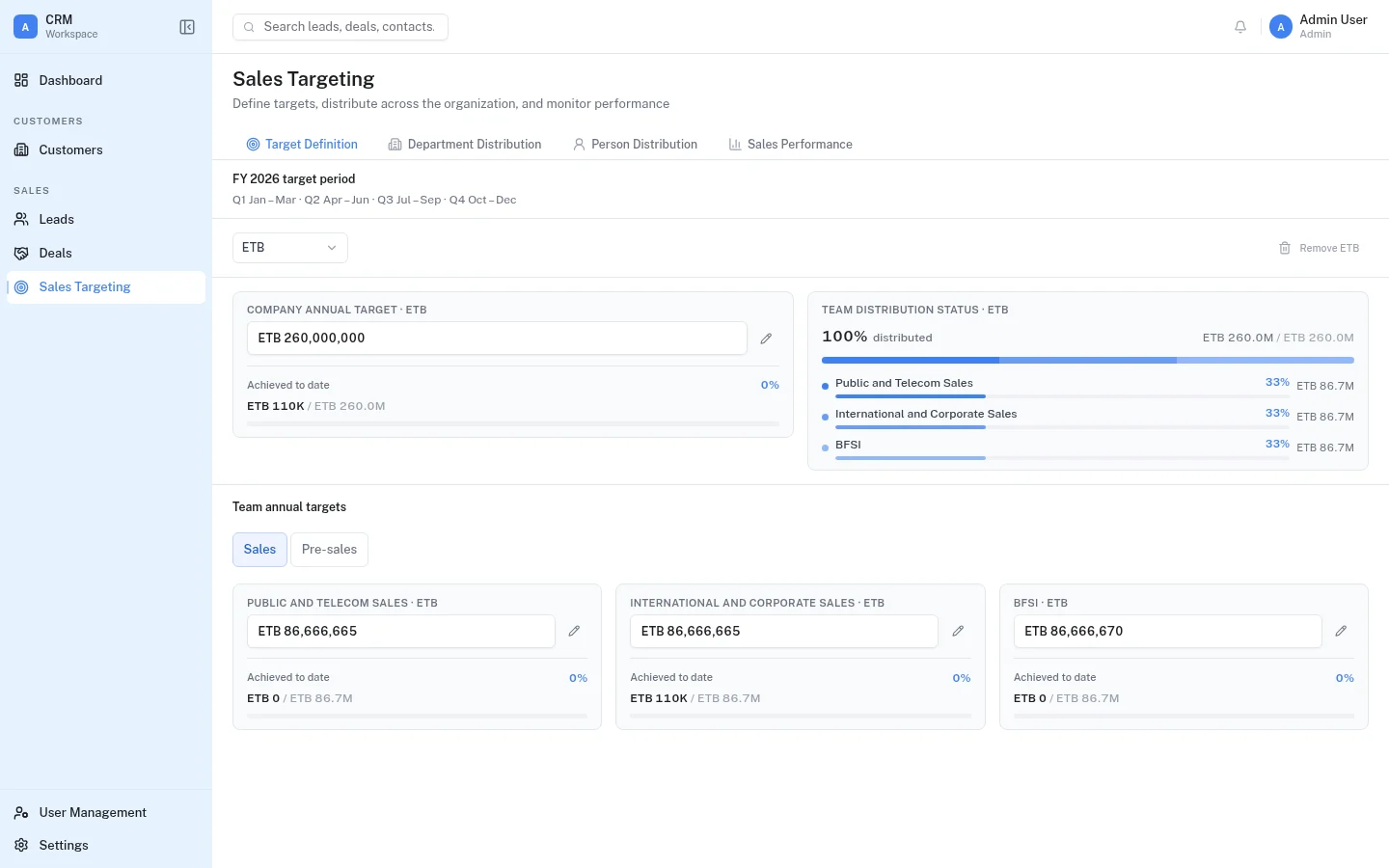
The Sales Targets module and targeting screens place planned performance alongside pipeline execution. Dashboard KPI cards and pipeline visualization turn that into a quicker overview.
Mock stores and local sample data support interactions without a backend. This distinction matters: the repository demonstrates the frontend model, not production data integrity or API integration.
Speed is useful. Judgment is the work.
AI-assisted coding helped explore a wide surface area quickly. The portfolio value lies in the structure of flows, the consistency of patterns, and identifying what needs review—not in suggesting that generated code alone proves product maturity.
The frontend uses Next.js, React, Tailwind and reusable UI primitives. Design quality still needs accessibility checks, error-state coverage, responsive review, usability testing and integration validation.
What the prototype proves—and what it doesn't.
The work demonstrates a coherent frontend architecture for connected sales activities. It does not demonstrate conversion uplift, pipeline acceleration, production adoption or a deployed backend.
If developed further, I would prioritize testing the lead-to-deal handoff, verifying permissions, integrating real data, reviewing empty/loading/failure states and measuring whether the most common actions are faster to complete.
The lesson wasn't to generate more screens. It was to connect the screens into a workflow that a sales team could actually reason about.
AI-assisted frontend prototype. Functional coverage and module relationships were checked against the GitHub repository. Screenshots were captured from the deployed prototype at crm-one-alpha-69.vercel.app and show local sample data; diagrams are source-based illustrations. Neither is evidence of measured outcomes.